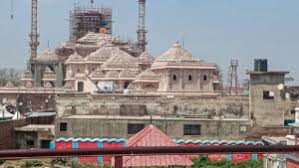
Another magnificent event is set to unfold in Ayodhya, with the Ram Temple Flag Hoisting (Dhwajarohanam) ceremony scheduled for November 25th. Prime Minister Modi and several prominent figures from across the country are expected to attend the ceremony. As the event approaches, devotees are curious about the design and meaning of the flag that will fly atop the Ram Mandir’s शिखर (shikhar) or spire. The temple’s Dharma Dhwajam (religious flag) is understood to be highly distinctive, primarily colored saffron (Kumkuma), which symbolizes flame, light, sacrifice, and penance, and represents eternal tradition.
The flag itself is rich with sacred imagery. It will be saffron-colored and feature the image of the Sun God (Surya Bhagwan), which is a direct symbol of Sri Rama’s Surya Vamsha (Solar Dynasty). Additionally, the flag will be etched with the symbol ‘Om,’ the first syllable of God’s name, signifying consciousness and eternal truth. A unique and significant symbol on the flag is the emblem of the Kovidar tree, which is revered as the royal emblem of Ayodhya, mentioned in both the Valmiki Ramayana and the Harivamsa Purana.
The flag will fly at a spectacular height, mounted on a 30-foot flagpole atop the temple’s 161-foot spire, resulting in a total height of 191 feet. The Kovidar tree has a special mythological connection, believed to be the world’s first hybrid plant, and it was this tree that Lakshmana climbed during Rama’s exile to see Bharata and his army approaching the forest. The event, which is expected to host about 3,000 guests from the Ayodhya district alone, is not just a religious celebration but a unique confluence of Indian cultural tradition, royal pride, and eternal values, meant to spread a new inspiration across the nation.