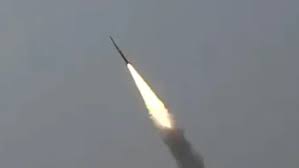
The Defence Research and Development Organisation (DRDO) has marked a significant breakthrough in India’s tactical missile capabilities by successfully testing the Solid Fuel Ducted Ramjet (SFDR) technology. Conducted at the Integrated Test Range (ITR) in Chandipur, Odisha, this flight test demonstrates India’s growing prowess in indigenous defense manufacturing. The successful demonstration of this propulsion system paves the way for the development of long-range air-to-air missiles, positioning India among a select group of nations possessing such sophisticated lethal technology.
The test, conducted at 10:45 AM on Tuesday, validated the performance of several complex subsystems. Initially, a ground booster launched the missile to the required velocity, after which the ramjet engine took over, maintaining supersonic speeds throughout the flight. Unlike conventional missiles, SFDR technology uses an air-breathing engine that extracts oxygen from the atmosphere during flight, significantly reducing the weight of the missile and allowing for a larger fuel load or warhead. This mechanism ensures a high average speed and a vastly extended engagement range.
This achievement provides a strategic edge to the Indian Air Force, enabling it to intercept enemy aircraft and aerial threats from much greater distances than currently possible. Defence Minister Rajnath Singh lauded the scientists from various DRDO laboratories, including DRDL and RCI, for this successful mission. As India continues its journey toward ‘Atmanirbharta’ (self-reliance) in defense, the SFDR technology serves as a cornerstone for future high-speed, long-range missile systems that will bolster national security.