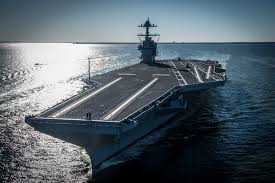
The USS Gerald R. Ford, the United States’ most advanced and expensive aircraft carrier, is reportedly grappling with severe sanitation issues even as it mobilizes for a potential mission against Iran. Despite being designed as a premier projection of American naval power, the vessel is struggling to provide basic amenities for its approximately 4,600 crew members. Reports indicate that sailors are being forced to wait in restroom queues for up to 45 minutes due to widespread shortages of functional toilets and systemic sewage failures.
The root of the problem lies in the ship’s vacuum-based sewage system (VCHT), which was adapted from cruise-ship technology. According to the U.S. Government Accountability Office, the system’s pipes are undersized and poorly matched for the high demands of a carrier crew, making them prone to frequent clogs. The strain of a prolonged deployment—now stretching toward eight months—has only worsened the situation. Maintenance logs reveal a staggering 205 maintenance calls over a single four-day period, requiring constant intervention from engineering teams and outside assistance to keep the systems even partially operational.
While Navy officials maintain that these plumbing “operational headaches” have not compromised the ship’s military readiness, the impact on crew morale is becoming a significant concern. The sailors have been at sea well beyond the typical six-month cycle, and their mission could potentially extend to 11 months. The combination of extended family separation and the daily struggle for basic sanitation is placing immense pressure on the personnel. As the carrier remains central to the U.S. posture in the Middle East, the situation underscores the difficulty of sustaining high-tech power projection when fundamental shipboard systems fail.