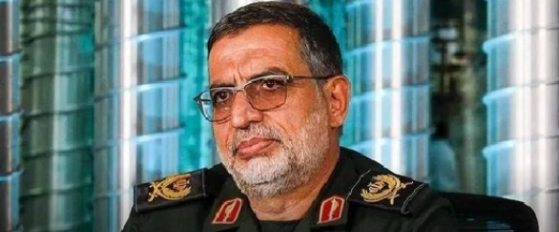
Brigadier General Ali Mohammad Nayini, the high-ranking spokesperson for Iran’s Islamic Revolutionary Guard Corps (IRGC), was killed in a joint U.S.-Israeli airstrike in the early hours of Friday. This dramatic escalation occurred just hours after Nayini had publicly warned Israel of a “missile surprise” that would intensify as the conflict progressed. The IRGC has confirmed his death, condemning the operation as a “cowardly terrorist attack,” while the Israel Defense Forces (IDF) verified the successful strike following weeks of heightened regional tensions.
In his final public statement before the strike, Nayini had mocked Israeli Prime Minister Benjamin Netanyahu’s skepticism regarding Iran’s ballistic capabilities. He asserted that Iran’s missile industry had reached an “unbeatable level” and warned that the enemy would soon face unexpected technological surprises on the battlefield. His remarks were a direct response to recent Israeli threats to reduce Iran’s nuclear and missile infrastructure to “dust and ashes,” highlighting the intense psychological and military warfare currently gripping the Middle East.
The death of such a prominent official has further strained the volatile relationship between the Iran-led axis and the U.S.-Israel coalition. Since late February 2026, the region has seen a surge in targeted strikes and retaliatory maneuvers, with this latest event marking a significant blow to the IRGC’s communication and strategic leadership. As both sides harden their stances, international observers fear that Nayini’s killing could trigger a major retaliatory response from Tehran, pushing the Middle East closer to a full-scale regional war.