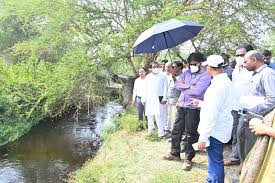
Andhra Pradesh Deputy Chief Minister Pawan Kalyan expressed deep concern and anger over the severe pollution of the sacred Godavari River during his visit to the East Godavari district. While reviewing the environmental crisis and the infrastructure plans for the upcoming Godavari Pushkaralu, the Deputy CM issued a strict deadline to government officials. He remarked with sorrow that the current tragic condition of the state’s lifeline rivers makes it feel as though the famous lyrics celebrating the “gargling sound of Godavari” might need to be rewritten to reflect how it is actually fading away due to pollution.
On the second day of his tour, Pawan Kalyan actively led a major crusade to protect the river. Rather than limiting himself to standard indoor review meetings, the Deputy CM personally boarded a boat at Venkatanagaram village in Rajahmundry Rural to inspect the ground reality. He closely examined the spots where toxic industrial effluents from factories like Andhra Paper Mills and local sewage channels directly dump into the water. Expressing intense dissatisfaction at the blackened river water, he strictly warned that playing with public health and the environment for corporate profits will not be tolerated. He questioned pollution control board officials for their negligence and ordered an immediate collection of water samples for laboratory testing.
To ensure permanent oversight, Pawan Kalyan announced the formation of a dedicated “Godavari Pollution Control Task Force” to constantly monitor industrial waste discharge and establish water treatment protocols. Turning his attention to the upcoming 2027 Godavari Pushkaralu, which expects a massive influx of nearly 100 million devotees, the Deputy CM pulled up officials for their extreme delay in preparing Detailed Project Reports (DPRs) for works worth ₹8,600 crores. He warned that rushed, last-minute construction compromises infrastructure quality and safety, explicitly demanding that absolute cleanliness be maintained so that visiting devotees are not forced to bathe in hazardous, disease-ridden water across the 274 designated panchayats.