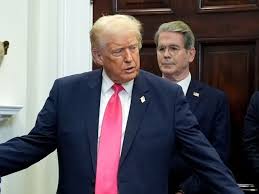
India has launched a sophisticated diplomatic counter-offensive against the heavy tariffs and “dead economy” remarks from the Trump administration. While the US sought to pressure India through trade restrictions, New Delhi refused to yield, instead securing a historic Free Trade Agreement (FTA) with the European Union (EU)—often referred to as the “Mother of All Deals.” This landmark agreement serves as a strategic pivot, creating an alternative market that reduces India’s dependence on the US and establishes India as a central leadership power in a multipolar world.
The shift in Washington’s stance, characterized by President Trump’s aggressive tariff threats and Commerce Secretary Howard Lutnick’s overconfident predictions of an Indian apology, has backfired. India has maintained its composure, strengthening ties with global powers like the UK, Russia, UAE, and Germany. The recent visit by EU President Ursula von der Leyen and the upcoming visit by Canadian Prime Minister Mark Carney signify a global trend where nations, weary of Washington’s protectionism, are looking toward India as a stable and reliable economic partner.
India’s “silent blow” has caused significant unease in Washington. US officials have expressed frustration that European nations are closing deals with India despite US-imposed sanctions over Russian oil. By securing resources such as uranium, energy, and AI partnerships through diverse international agreements, India has demonstrated that it cannot be isolated. This strategic autonomy proves that India is no longer just a participant in global trade but a formidable alternative to the US-China duopoly, turning a moment of potential crisis into a showcase of global leadership.