Free Bus Travel Announcement
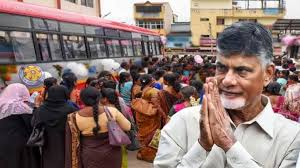
During the 2026-27 budget presentation, Finance Minister Payyaula Keshav announced that the state government will provide free travel for persons with disabilities in APSRTC buses. The scheme has been named “Indradhanusu.” Currently, Divyangjan receive a 50% discount on RTC fares, but once this scheme is implemented, they will enjoy a 100% subsidy, similar to the “Stree Shakti” scheme currently available for women. While the specific launch date has not been finalized, the government is working on the logistics to ensure smooth implementation across Palle Velugu, Express, and Metro bus services.
The Seven Promises of Indradhanusu
The free bus travel initiative is part of a larger package of seven promises (represented by the seven colors of the rainbow, hence “Indradhanusu”) announced by CM Chandrababu Naidu on International Day of Persons with Disabilities. These include:
-
Financial subsidy schemes similar to those provided for SC, ST, and BC communities.
-
Nomination of Divyangjan representatives to local bodies, corporations, and Public Sector Enterprises.
-
Special sports and talent development programs through SAAP.
-
Allocation of ground-floor housing in government projects for better accessibility.
-
On-site pension delivery for students studying in schools and colleges.
-
Construction of a dedicated ‘Divyanga Bhavan’ in Amaravati.
Impact and Implementation
The state government aims to provide a life of dignity and ease of movement for the disabled community. Following the success of the free bus travel for women (launched on August 15, 2025), which saw a significant rise in RTC patronage, the government is now scaling up its infrastructure to accommodate Divyangjan commuters without causing inconvenience. The budget allocation for Indradhanusu reflects the administration’s focus on inclusive growth, ensuring that physical barriers do not hinder the economic and social participation of the specially-abled population.