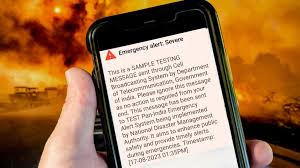
On Saturday, mobile users across India received an unexpected emergency alert message, accompanied by a loud beeping sound and intense vibration. This alert was part of a nationwide test conducted by the National Disaster Management Authority (NDMA) and the Department of Telecommunications (DoT). Utilizing 100% indigenous technology, the system is designed to notify citizens instantly during natural disasters like tsunamis, floods, or earthquakes to minimize the loss of life and property.
The system operates on Cell Broadcast technology, which offers significant advantages over traditional SMS-based alerts. Unlike standard messages that can be delayed by network congestion during emergencies, these alerts are sent directly to the phone’s screen within seconds. A key feature of this technology is its ability to reach mobile devices even if they do not have an active internet connection or are set to silent mode, ensuring maximum reach during critical situations.
The recent exercise, which took place around 11:00 AM, involved sending test messages in both English and Telugu to millions of devices. Officials have clarified that the public does not need to take any action when receiving these test alerts, as they are solely intended to verify the efficiency of the communication network. Previously, India relied on radio, TV, or standard SMS, which were often unreliable during major disasters; this new system ensures that the government maintains full control and security over vital emergency communications.