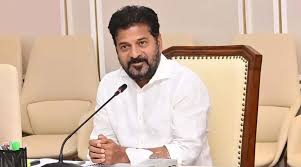
The Telangana government, led by Chief Minister A. Revanth Reddy, has announced a substantial increase in the minimum wages for workers across various sectors in the state. Acting upon the recommendations submitted by a specially formed Cabinet sub-committee, the revised wage structure is slated to come into official effect this June. Under this comprehensive reform, the state’s workforce has been categorized into four distinct tiers based on their skill levels: Unskilled, Semi-Skilled, Skilled, and Highly Skilled. To ensure equitable distribution and implementation, the administration has mapped these salary scales across three separate geographical zones—Zone-1 comprising major municipal corporations, Zone-2 covering urban municipalities, and Zone-3 spanning rural landscapes.
The upward wage revision introduces notable enhancements, particularly within the heavily populated urban centers mapped under Zone-1. For instance, the baseline monthly salary for an Unskilled worker has been elevated from ₹12,750 to a standardized ₹16,000. In parallel, the minimum compensation for Semi-Skilled laborers shifts from ₹13,592 to ₹17,000, while Skilled technicians will see their earnings jump from ₹13,772 to ₹18,500. The most advanced tier, Highly Skilled professionals, will now command a guaranteed base of ₹20,000, up from the previous ₹14,607. Commenting on the workforce landscape, Chief Minister Revanth Reddy remarked that while emerging technologies might present long-term employment shifts for traditional white-collar jobs, blue-collar positions backed by strong vocational expertise remain incredibly secure, adding that high-skilled local talents are drawing immense interest globally, with countries like Germany, Japan, and Singapore offering packages up to ₹2 lakhs.
Beyond labor policies, the Chief Minister addressed a major regional controversy involving Bandi Bhagirath, the son of senior leader Bandi Sanjay Kumar, clarifying that state police forces made the arrest under the strict purview of the POCSO Act during routine vehicular checkpoints rather than a voluntary surrender. Chief Minister Reddy firmly backed the official operational briefs provided by law enforcement, dismissing political counters regarding the timeline by citing necessary legal steps to verify the age of the complainant amidst high-profile security deployments for the Prime Minister’s simultaneous visit to Hyderabad. Furthermore, he criticized members of the opposition BRS for prematurely broadcasting sensitive media files related to the minor’s family on digital networks, characterizing their ongoing public commentary on an active investigation as a highly un-vetted, organized attempt to derive short-term political leverage at the cost of a family’s mental peace.