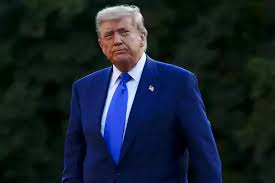
U.S. President Donald Trump has declared that the Strait of Hormuz is under complete American control, asserting that the maritime blockade against Iran is a “magnificent success.” Trump stated that the blockade would remain in place until a final agreement is reached with Tehran. However, international reports suggest a different reality on the ground, as dozens of Iranian vessels continue to bypass U.S. sanctions and maintain their shipping routes through the strategic waterway.
According to a report by the Financial Times, at least 34 tankers linked to Iran have successfully navigated the Strait of Hormuz since the blockade was imposed on April 13. Out of these, 19 tankers exited the Gulf while 15 entered. Analysis confirms that six of the outbound vessels carried approximately 10.7 million barrels of Iranian crude oil, generating an estimated 910 million in revenue for Iran. In contrast, U.S. Central Command reported detaining only one container ship and turning back 28 others.
To evade sophisticated U.S. surveillance, Iranian tankers are reportedly using “dark shipping” tactics, such as switching off their transponders to hide their locations. A notable example is the Iranian supertanker ‘Dorena,’ which disabled its tracking system to cross the strait before transferring its cargo to another vessel off the coast of Malaysia to mask the oil’s origin. Meanwhile, Iran has issued its own counter-directives, stating that the Strait is under the control of the Islamic Revolutionary Guard Corps (IRGC) and demanding that all passing vessels seek their explicit permission.
This escalating tension has created a “double blockade” scenario, leaving ship owners and international traders in a state of high alarm. Tensions peaked recently when Iranian forces reportedly fired upon vessels belonging to France and India. As Iran enforces its own maritime rules—restricting military movements while dictating paths for civilian ships—the global energy market remains on edge over the potential for a full-scale disruption in one of the world’s most vital oil transit points.