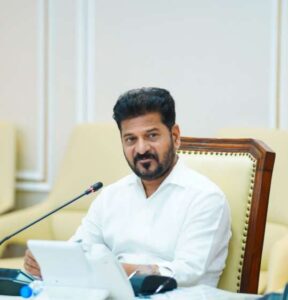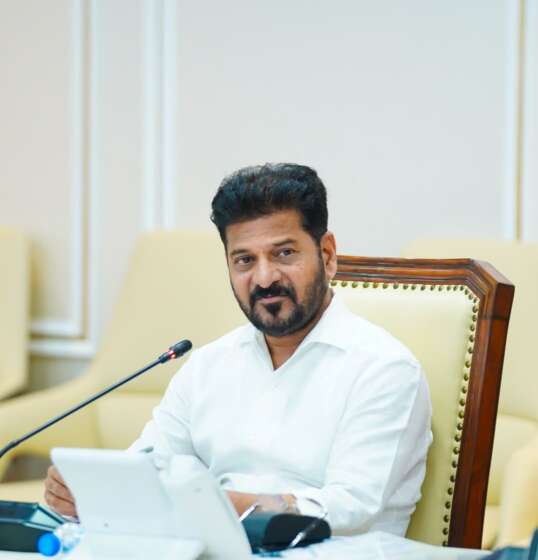
Telangana Chief Minister A. Revanth Reddy made several significant disclosures during a press conference at the Telangana Secretariat regarding the funding and expansion hurdles of the Hyderabad Metro Rail Phase 2 project. Addressing the public alongside representatives from the City Urban Renewal (CURE) limits, the Chief Minister recalled that the foundations for Hyderabad’s metro infrastructure were laid during the tenures of former Chief Minister Y.S. Rajasekhara Reddy and Union Minister Jaipal Reddy, with formal agreements finalized during Rosaiah’s administration. However, he strongly criticized the previous government’s shifting decisions for causing severe structural delays to the project.
Detailing the financial strain, the Chief Minister alleged that the previous BRS government blocked the execution of Phase 1 under the pretext of preserving historical monuments, which delayed the project by three years and escalated construction costs from an initially estimated ₹15,000 crore to ₹22,000 crore—inflicting a ₹7,000 crore additional burden on the state. This delay, coupled with the COVID-19 pandemic, pushed the executing concessionaire, L&T, into severe losses. Because L&T is currently incurring an annual operational loss of ₹400 crore and declined to take up the Phase 2 expansion, the state government stepped in to purchase L&T’s metro assets valued at ₹30,000 crore for a settled amount of ₹15,000 crore to take full ownership of the network.
To refinance L&T’s existing bank debt of ₹13,600 crore, which carries an interest rate of 8.25%, the Congress-led state government successfully secured a low-interest loan of ₹13,600 crore at just a 4% interest rate from a Japanese organization through the Indian Railway Finance Corporation (IRFC), even paying the state’s required upfront share of ₹1,400 crore. However, Revanth Reddy openly accused Union Minister G. Kishan Reddy of deliberately blocking the transfer of these funds by meeting Union Ministers Manohar Lal Khattar and Ashwini Vaishnaw on May 20 and 21 to halt the IRFC clearance out of political insecurity. Issuing a direct challenge, the Chief Minister demanded that the Center grant a No Objection Certificate (NOC) if it refuses to extend financial partnership, asserting that the state is fully prepared to self-fund and construct the entire 122-kilometer Phase 2 expansion independently.