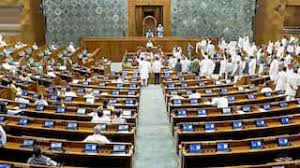
The BJP-led NDA government currently faces a significant hurdle in Parliament as it lacks the mandatory two-thirds majority required to pass high-stakes Constitutional Amendment Bills, such as Women’s Reservation and Delimitation. While the NDA maintains a stable majority for general governance with approximately 300 seats in the Lok Sabha, it falls short of the ~362 votes needed for constitutional changes. The situation is even more precarious in the Rajya Sabha, where the alliance is roughly 45 to 50 votes shy of the magic figure, making the support of the Congress-led INDIA bloc or neutral parties like YSRCP and BJD absolutely essential.
Political analysts suggest that the government’s “Plan B” might involve a strategy of “tactical silence” designed to put the opposition in a political trap. By introducing popular bills like the Women’s Reservation Bill directly on the floor without prior consensus, the BJP aims to dare the opposition to vote against them. If the INDIA bloc blocks the legislation, the ruling party plans to label them as “anti-women” or “anti-development,” potentially leveraging this narrative to gain sympathy and political mileage in upcoming elections. This shift from seeking consensus to seeking a “political edge” suggests that the bill has become a central piece in a larger electoral chess game.
Meanwhile, the Congress party has prepared its own counter-strategy, demanding an OBC sub-quota within the women’s reservation to avoid being portrayed as the spoiler. Additionally, the issue of Delimitation remains a flashpoint, with Southern states fearing a loss of political representation. The government may also rely on parliamentary maneuvers, such as encouraging opposition walkouts to lower the total voting pool, thereby making the two-thirds threshold easier to reach. Ultimately, if the bills fail to pass, the battle is expected to move from the halls of Parliament to the streets, as both sides prepare to blame each other for the legislative deadlock.