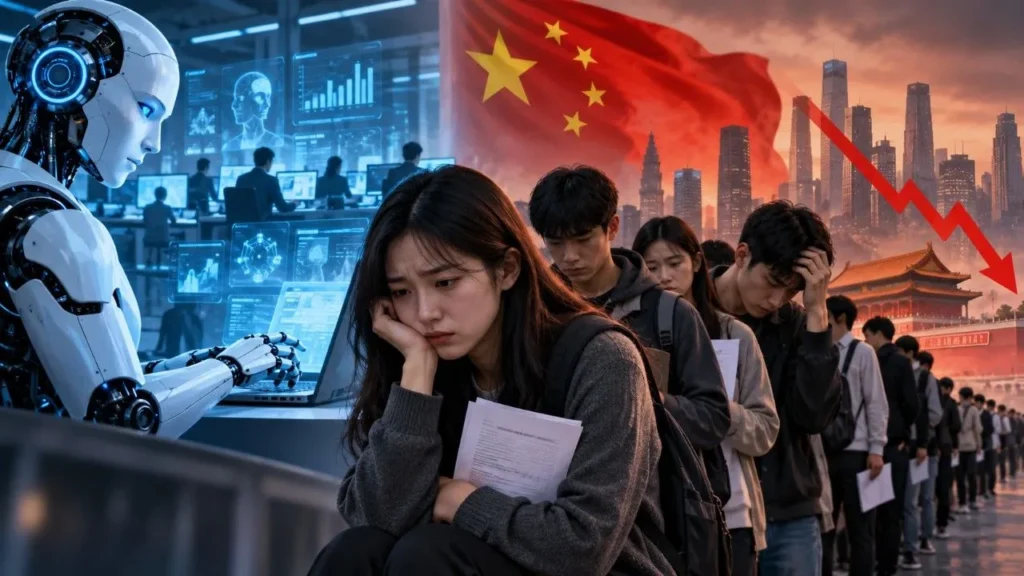
China has emerged as a major force in artificial intelligence, with AI technologies rapidly expanding across industries. However, this technological progress is also creating a serious employment challenge for the country’s educated youth. As companies increasingly adopt AI to reduce costs and automate tasks, concerns are growing that the technology could worsen unemployment among young graduates and put additional pressure on China’s economy.
For many highly educated Chinese youngsters, finding an entry-level job has become increasingly difficult. Even candidates with master’s degrees and additional professional skills are reportedly struggling to secure employment. Some graduates are said to have applied to hundreds of companies without receiving a single interview call. The growing use of AI in sectors such as design and content creation is further reducing the need for large teams to handle work that can now be completed within a few clicks.
The situation has sparked concerns about the future of China’s workforce. While AI is expected to boost productivity and create new industries, its rapid adoption could also eliminate traditional entry-level opportunities that once helped young people begin their careers. If the gap between technological advancement and job creation continues to widen, China could face a deeper AI-driven employment crisis with wider economic and social consequences.