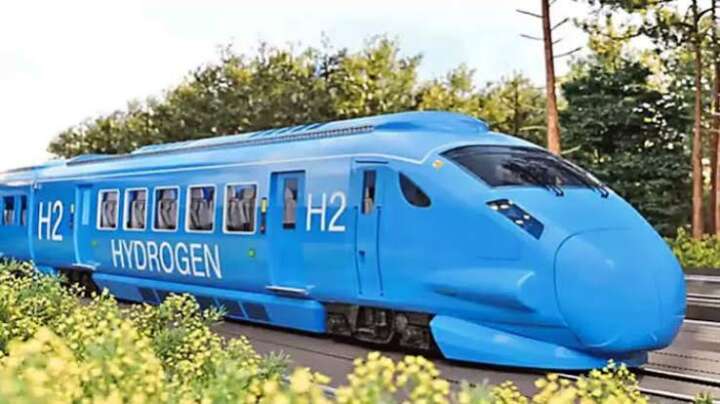
Indian Railways has achieved a historic milestone in sustainable transportation with the successful completion of the final experimental trials for the country’s first-ever hydrogen-powered train. The high-tech green train was tested at a top speed of 120 km/h along the Jind–Sonipat railway route in the state of Haryana. Following the seamless validation of all underlying technical parameters, the Ministry of Railways is actively making arrangements to open this eco-friendly service to regular passengers. This feat places India in an elite global club, alongside advanced nations like Germany, China, Japan, and the USA, which possess operational hydrogen fuel cell rail technology.
Designed as a definitive alternative to traditional diesel locomotives, these hydrogen trains are set to radically lower the environmental footprint of the country’s mass transit network. The propulsion system relies on hydrogen fuel cells that generate electricity with zero carbon emissions, emitting only water vapor and leaving no hazardous pollutants behind. Additionally, these trains operate with significantly lower acoustic signatures, offering a quiet commute that mitigates noise pollution along urban and rural rail corridors.
The refueling process is remarkably fast and efficient, requiring just 15 to 20 minutes to completely replenish the onboard hydrogen tanks. Once fully fueled, the train boasts an impressive operational range, capable of traveling continuously for up to 1,000 kilometers. By enabling long-distance, high-capacity travel at lower fuel expenses without compromising ecological health, this hydrogen rail initiative is poised to trigger a clean energy revolution across the Indian transportation landscape.