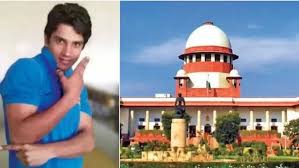
In a historic and emotionally charged judgment, the Supreme Court of India has allowed passive euthanasia for Harish Rana, a 35-year-old man who has been in a persistent vegetative state for the last 13 years. Harish, a former engineering student, suffered a traumatic brain injury in 2013 after accidentally falling from the fourth floor of his PG balcony in Chandigarh. Since then, he has been bedridden and non-responsive, kept alive only through life-support systems and the tireless care of his aging parents.
The bench, comprising Justice J.B. Pardiwala and Justice K.V. Vishwanathan, delivered the verdict after reviewing comprehensive medical reports from AIIMS, which stated that there was zero prospect of Harish’s recovery. The court noted that while a doctor’s duty is to save lives, continuing treatment when there is no hope of improvement becomes “purposeless.” The judges invoked Shakespeare’s famous “To be, or not to be” soliloquy and referenced Henry Ward Beecher to emphasize the complexity of the “right to die” with dignity.
This ruling marks the first time in India that passive euthanasia has been granted specifically for a patient in a long-term coma. The court lauded the “extraordinary love” shown by Harish’s family, who spent over a decade exhausted both financially and mentally. The bench directed AIIMS to oversee the withdrawal of life support, ensuring that the process is handled with the utmost dignity. This judgment builds upon the 2011 Aruna Shanbaug precedent, further refining the legal framework for “death with dignity” in exceptional medical cases.